Statewide Races in 2026
In 2026, state offices up for election include the Governor and Lieutenant Governor, Secretary of State, Attorney General, State Treasurer, Insurance Commissioner, all members of the Kansas House of Representatives, and members of odd-numbered districts in the State Board of Education. There will be special elections for some Kansas Senate seats, including one in the Wichita area. There will be judicial retention votes. There is also a ballot question during the General Election about a proposed amendment to the Kansas constitution.
Statewide Offices
Governor & Lieutenant Governor
The Kansas state government's executive branch is led by the Governor, who is responsible for carrying out state laws and administering the executive budget. The Lieutenant Governor is first in line to succeed to the governorship in the event of a vacancy. The Governor and Lieutenant Governor are elected to a 4-year term. They are restricted to two consecutive terms in office, after which they must wait one term before being able to run again. The current Governor of Kansas is Laura Kelly and Lieutenant Governor is David Toland. Governor and Lieutenant Governor are next up for election in 2026.
List of Governor & Lieutenant Governor candidates
Secretary of State
The Secretary of State is the state's chief election officer. The Secretary of State is elected to a 4-year term with no term limit. The Secretary of State is responsible for:
- Administering elections
- Administering Kansas business entity laws
- Administering the uniform commercial code
The Secretary of State is a member of the State Board of Canvassers, State Election Board, State Objections Board, and State Rules and Regulations Board. The Secretary of State appoints the election commissioner in the four most populous counties: Johnson, Sedgwick, Shawnee, and Wyandotte. The current Secretary of State is Scott Schwab. The Secretary of State is up for election in 2026.
List of Secretary of State candidates
Attorney General
The Attorney General is the state's top law enforcement official. The Attorney General is elected to a 4-year term with no term limit. The Attorney General's duties include:
- Assisting in criminal investigation and prosecution
- Representing the state and its employees in civil lawsuits
- Providing legal advice to state officers and employees
The Attorney General is a member of the State Board of Canvassers, State Election Board, State Objections Board, State Records Board, and State Rules and Regulations Board. The current Attorney General is Kris Kobach. The Attorney General is next up for election in 2026.
List of Attorney General candidates
State Treasurer
The State Treasurer acts as the state's chief financial officer. The State Treasurer is elected to a 4-year term with no term limits. The State Treasurer's office is responsible for administering the state's budget and payroll, managing the Learning Quest postsecondary education savings program, and maintaining a list of unclaimed property. The current State Treasurer is Steven Johnson. The State Treasurer is next up for election in 2026.
List of State Treasurer candidates
Insurance Commissioner
The Insurance Commissioner is responsible for regulating all insurance sold in Kansas and overseeing insurance companies and agents licensed to do business in Kansas. The Insurance Commissioner is elected to a 4-year term with no term limits. State law requires the Insurance Commissioner to "be a person well versed and experienced in the business of insurance and matters relating thereto; and he shall give his personal presence and attention to the duties of his office; but in no case shall such commissioner of insurance be in the employment of any insurance company or have any official connection with any insurance company, or any financial interest in any insurance company other than as a policyholder." The current Insurance Commissioner is Vicki Schmidt. The Insurance Commissioner is next up for election in 2026.
List of Insurance Commissioner candidates
Kansas Senate
Kansas has 40 Senate districts, including eight that comprise part of Wichita or Sedgwick County. Kansas senators are elected to a 4-year term with no term limit. The Senate meets in Topeka annually for approximately 90 days, beginning in January. In case of a vacancy, precinct committee members within the Senate district from that senator's political party will elect a replacement senator. If the vacancy occurs prior to May 1 of the second year of the term, then a special election will be held to complete the remainder of the term. Senator Mary Ware resigned on November 13, 2025. A special election will be held in 2026 to complete the remainder of the term. During the next regular election for Kansas Senate, in 2028, all 40 Senate seats are up for election.
List of Wichita-area Senate candidates
Kansas House of Representatives
Kansas has 125 state representatives, including 24 from districts that comprise part of Wichita or Sedgwick County. Representatives are elected to a 2-year term with no term limit. In case of a vacancy, precinct committee members within the House district will elect a replacement representative. The House meets in Topeka annually for approximately 90 days, beginning in January. All 125 seats are up for election in 2026.
List of Wichita-area Representative candidates
State Board of Education
The mission of the State Board of Education "is to prepare Kansas students for lifelong success through rigorous, quality academic instruction, career training and character development according to each student's gifts and talents," according to the State Department of Education's website. The Board of Education has 10 districts across the state, including three that comprise part of Wichita or Sedgwick County: districts 7, 8, and 10. Members serve 4-year terms. The seats in odd-numbered districts are up for election in 2026.
List of Wichita-area State Board of Education candidates
Judicial Retention
Supreme Court
In Kansas, when there is a vacancy on the Supreme Court, a nonpartisan nominating committee selects three potential candidates for justice and then presents those candidates to the governor. The governor must appoint one of those candidates. The appointment lasts for a year, followed by a retention election in which voters are given a "yes" or "no" choice whether to keep the justice in office for a six-year term. Justices must face a retention vote for each successive six-year term. There are seven justices on the Kansas Supreme Court.
Court of Appeals
In Kansas, the governor appoints judges to the Court of Appeals with confirmation from the Kansas Senate. The appointment lasts for at least a year, followed by a retention election in which voters are given a "yes" or "no" choice whether to keep the judge in office for a four-year term. Judges must face a retention vote for each successive four-year term. There are fourteen judges on the Kansas Court of Appeals.
In 2026, there are 2 Supreme Court justices and five Court of Appeals judges facing a retention vote.
List of judges and justices facing retention votes
Statewide Ballot Measures
During the November 2026 General Election, there will be one statewide ballot measure.
Learn about the Ballot Measure
Candidates for Statewide Office in 2026
Where possible, the candidate's website or an official campaign social media page will be linked to their name.
Governor & Lieutenant Governor Candidates
At least one other candidate, Sharilyn Ray (I-Wichita), has announced a campaign for Governor but is currently not listed on the Kansas Secretary of State's list of candidates.
The incumbent Governor, Laura Kelly, is ineligible to run in 2026 due to term limits.
Secretary of State Candidates
The incumbent Secretary of State, Scott Schwab, ran for Governor.
Attorney General Candidates
State Treasurer Candidates
Insurance Commissioner Candidates
The incumbent Insurance Commissioner, Vicki Schmidt, ran for Governor.
Wichita-area Senate Candidates
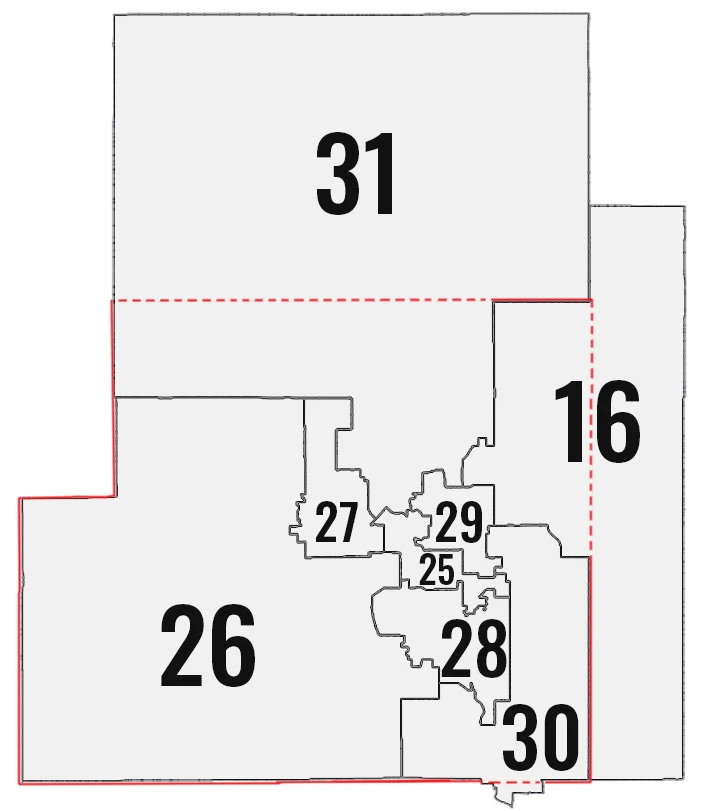
District 25 Special Election
Senator Mary Ware (D) retired in 2025. In accordance with state law, precinct commitee members in District 25 from that senator's party voted for a replacement. A special election will determine who will hold the seat for the rest of the term. All Kansas Senate seats are next up for election in 2028.
- Silas J. Miller (D - Wichita) (incumbent)
- Christopher Parisho (R - Wichita)
Wichita-area House of Representatives Candidates
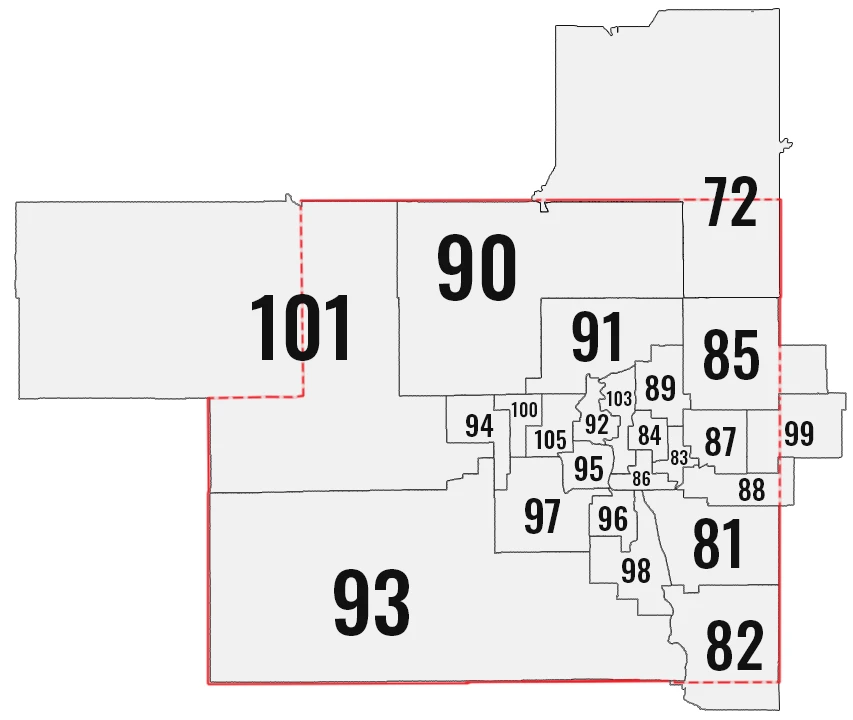
District 72
House District 72 also includes portions of Harvey county.
District 81
District 82
House District 82 also includes portions of Sumner county.
District 83
The incumbent in District 83, Henry Helgerson, lost in the primary election.
District 84
The incumbent in District 84, Ford Carr, lost in the primary election.
District 85
House District 85 also includes portions of Butler county.
District 86
District 87
- Susan O. Estes (R - Wichita) (incumbent)
District 88
House District 88 also includes portions of Butler county.
District 89
The incumbent in District 89, KC Ohaebosim, is running for Lieutenant Governor.
District 90
- Steve Huebert (R - Valley Center) (incumbent)
- Amy Warhurst (D - Valley Center)
District 91
District 92
District 93
- Brian Bergkamp (R - Wichita) (incumbent)
- Eli Rueda-Vega (D - Haysville)
District 94
District 95
District 96
District 97
District 98
District 99
House District 99 also includes portions of Butler county.
District 100
The District 100 incumbent, Dan Hawkins, is running for Insurance Commissioner.
District 101
House District 101 also includes portions of Reno county.
The District 101 incumbent, Joe Seiwert, did not file for re-election.
District 103
District 105
Wichita-area State Board of Education Candidates
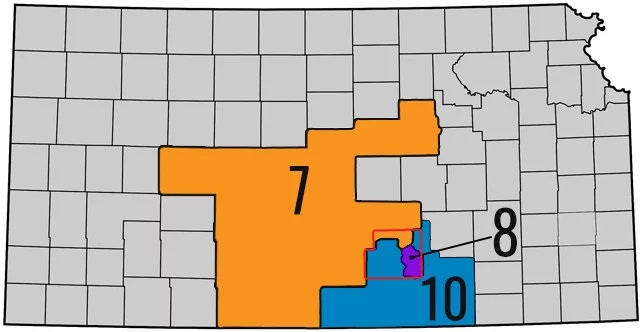
The next election for State Board of Education Districts 8 and 10—and all even-numbered Board of Education seats—is in 2028.
District 7
The Distirct 7 incumbent, Dennis Hershberger, declined to seek re-election.
Judges Facing Retention Election
A judicial retention question will read, "Shall [Name], [City], [Position], [Court], be retained in Office?"
Supreme Court Justice
- Eric S. Rosen, Topeka, Position No. 4
- Larkin E. Walsh, Leawood, Position No.6
Court of Appeals
- Lesley Ann Isherwood, Wichita, Position No. 2
- Amy Fellows Cline, Wichita, Position No. 3
- Kim R. Schroeder, Hugoton, Position No. 5
- Lori Ann Bolton Fleming, Weir, Position No. 7
- Jacy Hurst, Lawrence, Position No. 13
This Year's Statewide Ballot Measure
Every ballot in Kansas will have the following question about a proposed amendment to the Kansas constitution.
Explanatory statement. This amendment would clarify that only a person who is a citizen of the United States is eligible to vote in this state.
A vote for this proposition would clarify that only a person who is a citizen of the United States is eligible to vote in this state.
A vote against this proposition would make no change to the constitution of the state of Kansas, and the language concerning voter qualifications would remain the same.
Shall the following be adopted?
"§ 1. Qualifications of electors. Every(a) No person shall be deemed a qualified elector unless such person:
(1) Is a citizen of the United States who;
(2) has attained the age of eighteen years; and who
(3) except as provided in subsection (b) or (c), resides in the voting area in which he or she such person seeks to vote shall be deemed a qualified elector.
(b) Laws of this state relating to voting for presidential electors and candidates for the office of president and vice-president of the United States shall comply with the laws of the United States relating thereto. A citizen of the United States, who is otherwise qualified to vote in Kansas for presidential electors and candidates for the offices of president and vice-president of the United States may vote for such officers either in person or by absentee ballot notwithstanding the fact that such person may have become a nonresident of this state if his or her such person’s removal from this state occurs during a period in accordance with federal law next preceding such election.
(c) A person who is otherwise a qualified elector may vote in the voting area of his or her such person’s former residence either in person or by absentee ballot notwithstanding the fact that such person may have become a nonresident of such voting area during a period prescribed by law next preceding the election at which he or she such person seeks to vote, if his such person’s new residence is in another voting area in the state of Kansas."
This page last updated on October 8, 2026.